Single-Bag Rosette Swirl with Wilton 1M
The twelve-second rosette that anchors cupcake bouquets, drip cakes and cookie trays.
Wilton 1M
Medium
Beginner
Technique archive
Every card states its tip number, icing stage, drying hours and finished size. The list is grouped by family and ordered by release date within each family.
One-squeeze swirls that read as roses
The twelve-second rosette that anchors cupcake bouquets, drip cakes and cookie trays.
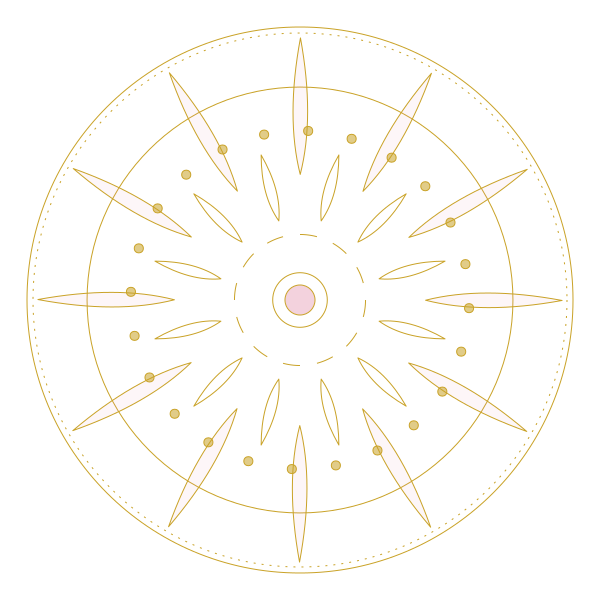
One squeeze, six broad teeth, and a stripe of pale pink that reads as a rose.
A full open rose built from seven crescent petals, no flower nail needed.
Ten narrow teeth, a deep centre and the tall swirl that makes a cake look two tiers high.
Petal-tip blooms built petal by petal
The fourteen-petal rose that has been the standard since the 1950s, piped on a flower nail.

Five strokes, one flat flower - the fastest piped bloom that still looks like a real species.
Three petals in one stroke and a gold throat - the smallest flower on the site and the hardest to get level.
Forty tiny drop flowers in three shades, and the fastest way to cover a large cake surface.
Leaf-tip greenery, from garlands to olive branches
One continuous squeeze, nine leaves, and a vine that hides every join in your cake work.
Vertical leaves that give a flat piped arrangement height without wires or cutters.
The filler leaf that turns three piped flowers into a bouquet.
Edges that finish a cake and survive transport
The border that has finished the bottom edge of cakes for a century, piped in one rhythm.
Two passes per row, four alternating columns, and a whole cake side that reads as woven cane.
The same rhythm as a shell, mirrored - and the only border that lets a cake carry two stripes of colour.
Lines, beads and grids that cover a surface
One unbroken squiggle that turns a bare cake side into antique lace in twelve minutes.
Graduated beads that shrink by a millimetre at a time - the cheapest way to make a plain cake look designed.
A 45 degree diamond grid that covers a cake side without hiding what is under it.
Ruffles, monograms and overpiped scrollwork
A pleated ribbon that stands 20 mm off the cake, piped in one pass with a 104 held sideways.
Filter by icing stage
The same tip at a different stage is a different decoration.
| Stage | Test | Used for | Cards |
|---|---|---|---|
| Soft peak | The peak folds over at the tip and does not hold. It will not support a vertical ribbon. | Cornelli lace, wisteria beads, fine script. Anywhere the icing is a thin line that has to flow off the tip. | 1 |
| Medium peak | The peak bends at the tip like a folded finger and holds the bend for two seconds. | Rosettes, drop flowers, shells, basketweave, beads, lettering. The default stage for most piped work. | 12 |
| Stiff peak | The peak stands straight up and holds for five seconds without bending. | Crescent roses, violets, stand-up leaves, poinsettias, ruffle garlands, Lambeth scrollwork. Anything that has to hold its own weight. | 5 |
Tip ledger
18 released cards share 15 tip numbers. Open a number to see everything that tip can do.
Longest cure in the current release: 36 hours.